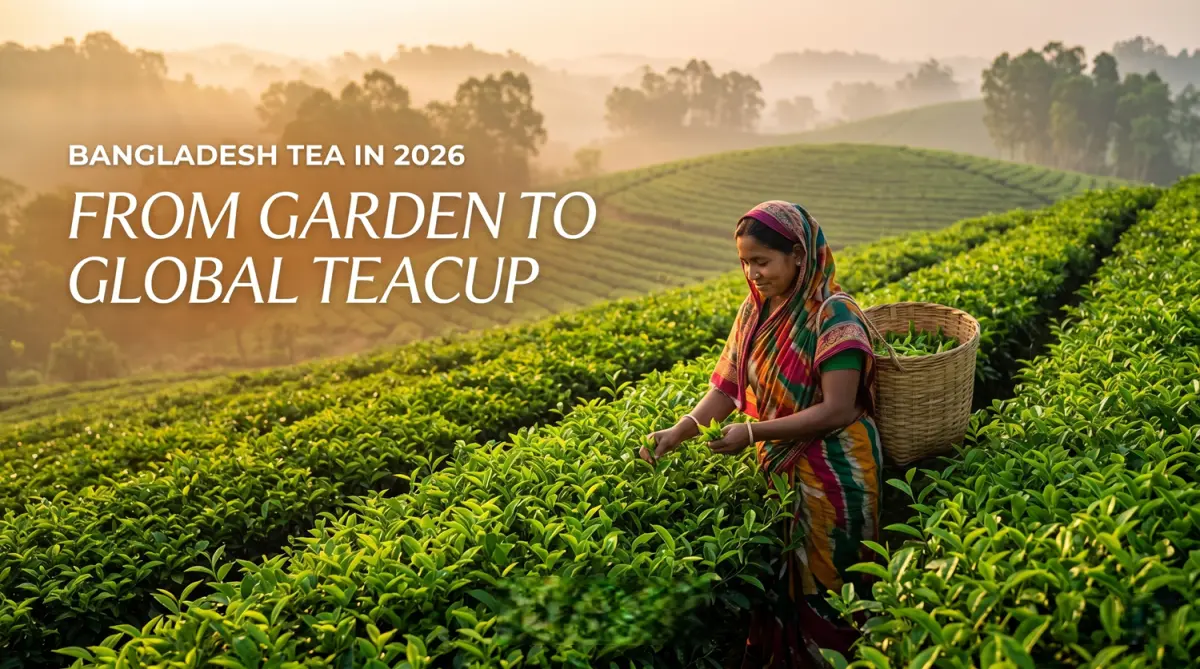
Bangladesh Tea in 2026: From Garden to Global Teacup
AI Summary: Bangladesh’s tea industry is growing again in 2026, with higher production, strong domestic demand and renewed export optimism, even as gardens face rising costs, climate risks and global competition.
A growing but pressured industry
JAR TEA ; NISSUL TEATea is more than a drink in Bangladesh; it is part of daily life, a source of rural jobs, and an important contributor to export earnings. From the misty hills of Sylhet to the northern small gardens and Chattogram’s auctions, the industry is quietly modernising while facing serious challenges from climate, costs and global competition. In 2025 Bangladesh’s tea production grew by just over 2%, reaching around 94.9 million kilograms, supported by better farming practices and relatively favourable weather. The Bangladesh Tea Board has now set a higher target of about 103–104 million kilograms for the 2025–26/2026 season, signalling confidence that output can rise further if conditions remain supportive. A growing but pressured industry Recent seasons show a mixed picture for the tea sector. On the positive side, production has been increasing again after earlier setbacks, driven by: Modern cultivation methods and improved cloned tea plants. The growing contribution of small tea farmers in the northern districts, which now account for roughly one‑fifth of national output. Strong domestic demand, estimated at around 85–90 million kilograms a year, as tea remains the default hot beverage in urban and rural homes. However, the industry is also under pressure. Rising production costs, wage demands, climate variability and competition from larger producers like Kenya, India and China make it harder for Bangladeshi tea to compete purely on price. Export volumes have fluctuated sharply: they surged to about 2.45 million kilograms in 2024, up nearly 58% from the previous year, but then came under pressure again as costs rose and some gardens struggled with weather‑related disruptions. Auctions in Chattogram: The heart of trade Every trading year, the tea cycle in Bangladesh is marked by the start of auctions in Chattogram, Srimangal and Panchagarh. The 2026–27 season opened in late April with strong demand at the first Chattogram auction, giving producers and traders a more optimistic outlook after last season’s supply shortages. For the current season, the Tea Board has targeted around 10.4 crore kilograms (104 million kg) of tea for production and marketing, with a plan for dozens of auctions across the three main centres. Domestic prices at auction have been hovering roughly in the Tk170–190 per kg range, with export tea fetching higher average prices above Tk250 per kg in recent data. These auctions are where brands like JAR TEA source selected leaf grades to build consistent blends for households, offices, hotels and export markets. By carefully choosing lots with strong liquor, balanced flavour and stable quality, buyers can craft blends that stay reliable through changing seasons and garden variations. From Sylhet’s hills to global shelves Historically, tea in Bangladesh began under British rule in Sylhet’s hill tracts, later expanding into Chattogram and other regions. Today there are around 167 commercial tea estates along with hundreds of small growers, together forming a complex ecosystem of gardens, factories, brokers, auctioneers and brands. In economic terms, tea acts as a modest but strategic export. In 2024, exports of about 2.45 million kilograms earned roughly Tk46 crore for the country, with shipments going to Pakistan, Afghanistan, Russia, Singapore, the United States and several European markets. While these volumes are small compared to giants like India and Kenya, they still support foreign exchange earnings and promote “Brand Bangladesh” abroad. JAR TEA and the search for the perfect cup Within this landscape, JAR TEA positions itself as a premium Bangladeshi tea brand that focuses on aroma, colour and consistency. The brand sources from the national auction and selected suppliers, placing emphasis on leaf grades that deliver strong liquor, a satisfying mouth‑feel and a pleasant after‑taste. Under the supervision of internationally certified tea tasters, JAR TEA builds blends that work equally well for a family’s morning cup, an office pantry or hotel service. The philosophy is simple: one cup of tea should not only taste good, it should bring a sense of calm and connection at the end of a busy day. For Bangladeshi consumers, brands like JAR TEA also represent trust. In a market where quality can vary widely, a consistent, BSTI‑certified brand that clearly communicates its blend style and brewing instructions helps customers get a reliable cup every time, whether they prefer light, medium or strong liquor. Challenges on the horizon The future of tea in Bangladesh will depend on how the industry responds to several long‑term challenges: Climate change: Irregular rainfall, higher temperatures and extreme weather can reduce yields and affect leaf quality, particularly in vulnerable gardens. Worker welfare: Tea workers have been campaigning for better wages and living conditions, and pressure is growing for more inclusive, fair value chains. Global competition: Producers in other countries often benefit from larger scale, lower costs and stronger branding, forcing Bangladesh to compete on quality and story, not just price. Policy support, investment in modernisation and stronger branding will be essential to keep the sector competitive while protecting workers and the environment. A cup of opportunity Despite obstacles, there is real opportunity if Bangladesh can position its tea as a distinctive, sustainable product. Growing domestic consumption offers a stable base, while niche export markets are opening for high‑quality single‑origin teas and value‑added blends. For brands like JAR TEA, the path forward lies in combining careful sourcing, consistent quality and honest storytelling about origin, people and process. Every cup can then carry not just flavour, but also a story—from the rows of bright green bushes in Sylhet and Panchagarh to the teacup on a family table in Chattogram, Dhaka or overseas.
JAR LIMITED
⭐ JAR Group VerifiedGlobal Trading | Consumer Brands | Business Solutions
JAR HOUSE (1st Floor)
Middle Halishahar, Munshipara
Chattogram-4215, Bangladesh
Part of the JAR Group ecosystem. Operating global trade, consumer products, and brand development initiatives.
Source / Link: https://magazine.jar.bd/