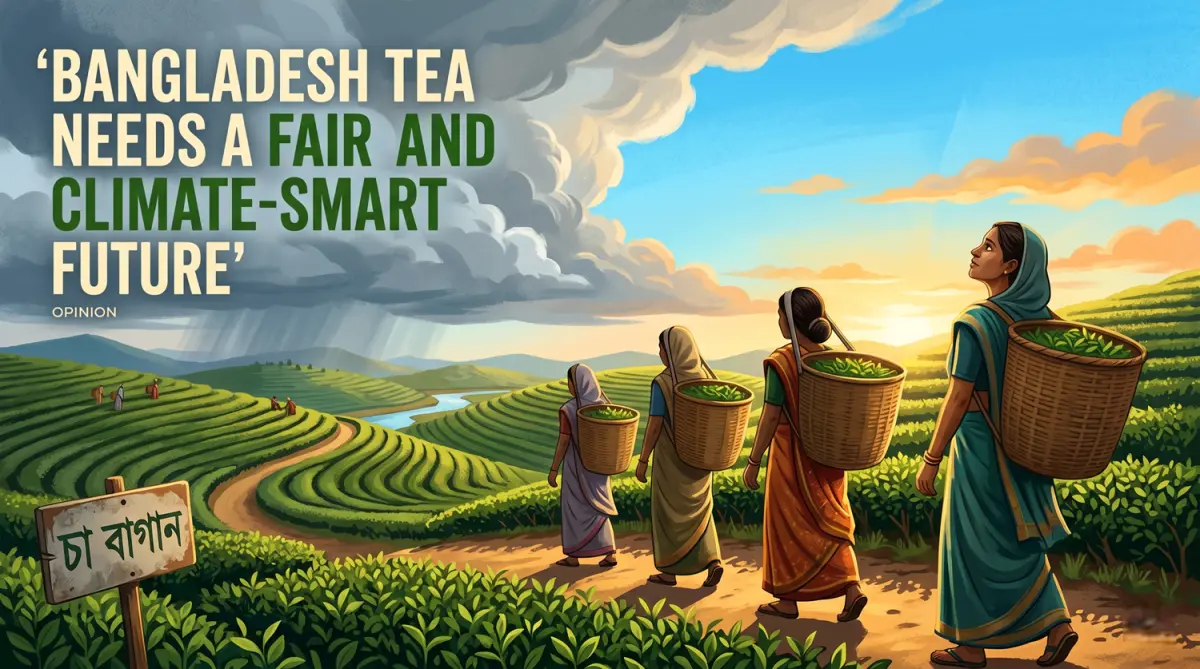
Opinion: Bangladesh Tea Needs a Fair and Climate‑Smart Future
AI Summary: Bangladesh’s tea industry is growing again, but low wages, fragile worker welfare and rising climate risks show why the sector must become fairer and more climate‑smart for a stable future.
Tea is one of Bangladesh’s most beautiful stories—but also one of its most uncomfortable truths. As a nation we proudly serve tea in every office, bus stand and family gathering, yet many of the people who grow and pluck those leaves still live with low wages, fragile housing and limited access to health and education, while gardens themselves face rising climate risks. In 2025, national tea output grew again and exports jumped, creating headlines about “record production” and “strong auctions” in Chattogram and other centres. But behind the numbers lies a basic question: can an industry be called successful if its workers remain among the lowest‑paid in the formal economy and its future is threatened by heat, erratic rainfall and market shocks? A strong cup built on fragile foundations Economically, tea is a vital crop for Bangladesh, anchoring rural livelihoods in Sylhet, Chattogram and the growing northern gardens. Production has risen in recent years and exports surged by about 58% in 2024, giving the impression of a sector on the rise. Yet multiple studies and rights groups have repeatedly documented that tea workers’ monthly incomes remain lower than almost any other major sector, with daily wage rates historically hovering at very modest levels. Climate stress adds another layer of fragility. Changing rainfall patterns, more frequent heatwaves and extreme weather threaten yields and quality, especially in estates with older bushes and limited investment. Analysts warn that without serious adaptation measures, climate volatility could shrink tea’s contribution to rural economies and export earnings, affecting both business owners and thousands of workers who have few alternative jobs. Fairness is not charity, it is strategy In my view, the tea industry will not have a stable future if workers continue to carry the heaviest burden of risk. Fair wages, safe housing, access to healthcare and education for workers’ children are not simply humanitarian demands; they are strategic investments in productivity, quality and brand reputation. Global buyers and conscious consumers are paying closer attention to how products are made. Reports of low wages, unpaid overtime or poor living conditions can damage the image of “Bangladesh tea” in export markets that increasingly ask about ESG (environmental, social and governance) performance. If the industry wants to sell more branded, value‑added tea at higher prices, it must show that the value is being fairly shared along the chain—from auction rooms to garden lines. Climate‑smart tea is now a necessity The second pillar of a sustainable tea future is climate resilience. Research already highlights how hotter days and unpredictable rains reduce yields and push some farmers to use more inputs just to maintain production. The cost of doing nothing will not be zero; it will show up as lower yields, declining quality and higher business risk. Bangladesh needs a coordinated climate‑smart tea plan: Investment in drought‑resistant and high‑yield varieties. Better water management, shade trees and soil conservation to protect plantations. Extension services and training for both estate managers and smallholders, especially in the northern gardens. International climate finance and responsible buyers can support this transition, but local leadership from the Tea Board, garden owners and domestic brands will be decisive. The role of brands, buyers and drinkers Brands that proudly carry the Bangladesh tea flag—whether for domestic shelves or exports—have a unique opportunity to lead by example. By committing to fair sourcing standards, transparent supply chains and investments in worker welfare, they can create a positive pressure throughout the industry. Consumers also have power. When we pick up a packet in a supermarket or order a cup at a café, we can ask simple questions: Does this brand say anything about where the tea is grown? Does it mention workers, community projects or environmental practices? The more often these questions are heard, the more incentives brands will have to respond meaningfully. A call to re‑imagine the value of tea Tea has shaped the history and culture of Bangladesh for more than a century. It deserves a future where gardens are not only productive, but also just and climate‑resilient. That is why I believe the next chapter of the industry must be built on three commitments: fair wages and decent living standards for workers, serious climate adaptation, and transparent, responsible branding from estate to teacup. If we can align business interests with human dignity and environmental reality, Bangladesh tea will not only survive global competition—it will stand out as a product that people can drink with pride. Every cup then becomes more than a habit; it becomes a quiet vote for the kind of economy and society we want to build.
JAR LIMITED
⭐ JAR Group VerifiedGlobal Trading | Consumer Brands | Business Solutions
JAR HOUSE (1st Floor)
Middle Halishahar, Munshipara
Chattogram-4215, Bangladesh
Part of the JAR Group ecosystem. Operating global trade, consumer products, and brand development initiatives.